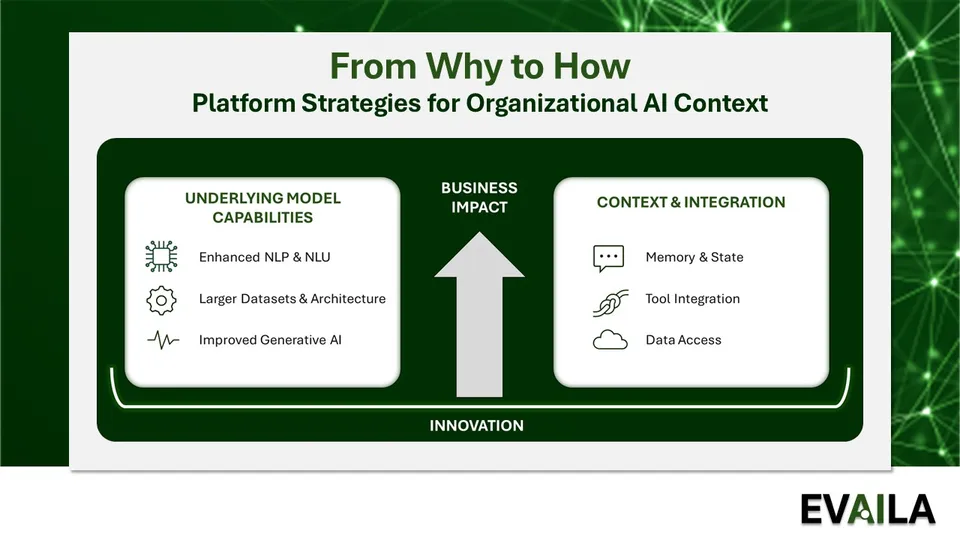
Platform Strategies for Organizational AI Context
Moving from “Why AI?” to “How” with Organizational Context
AI conversations are everywhere, but most organizations are still wrestling with the part that matters most:
How do we make AI deliver measurable value in day-to-day work consistently, safely, and at scale?
In this recorded session, Evaila founder Emily Lewis-Pinnell walks through a practical platform strategy that prioritizes organizational context and integration, so teams aren’t rebuilding standards from scratch in every prompt, and leaders can support adoption with confidence.
▶ Watch the recording: https://youtu.be/51vx9gb9w0c
What you’ll learn
This session focuses on the operational realities of AI adoption, beyond the “which model is best?” debate, and gets into the decisions that actually impact quality, risk, and ROI:
- How to define brand, standards, and compliance guardrails once and apply them consistently
- How to reduce inconsistent outputs caused by ad-hoc AI usage across teams
- Why integration beats intelligence for many everyday business workflows
- How well-governed context helps you scale responsibly (and also serves as protection against vendor lock-in!)
The real scaling challenge: context gets rebuilt every time
Many teams start strong with experimentation, but hit friction when AI becomes part of real work. Common symptoms show up fast:
- People repeatedly paste brand guidance, policies, and formatting rules into new chats
- Different teams get different results because standards aren’t enforced consistently
- Review cycles grow because outputs are uneven, risky, or off-brand
- Governance lags behind usage, creating hesitation from leadership
The fix isn’t “more prompting.” It’s a platform approach that makes context reliable and reusable.
Key takeaways from the session
1) Integration creates leverage
For a large portion of everyday use cases, value comes from AI living inside the tools people already use (docs, ticketing, CRM, knowledge bases, analytics workflows), not from marginal improvements in reasoning.
When AI is integrated well, it reduces handoffs and manual steps, which is where compounding productivity gains show up.
2) Start with core context
If you want scalable adoption, begin by standardizing what “good” looks like:
- brand voice and style rules
- compliance and legal guardrails
- approved messaging and claims
- templates, examples, and “do/don’t” guidance
- role-based access and data boundaries
This creates a repeatable foundation for responsible usage and consistent outcomes.
3) Well-governed context reduces vendor lock-in risk
A strong context strategy doesn’t require “tool sprawl.” In fact, running multiple platforms indiscriminately can drive costs.
Instead, the goal is portable, well-governed context, so your organization’s standards remain durable even if platforms, pricing, or capabilities change. When your context is centrally managed and documented in format-agnostic ways, switching tools later is far less disruptive.
Who this is for
This recording is especially useful if you’re:
- building an AI governance or enablement program
- deciding what “standardization” should mean for your org
- trying to move from pilots to scaled adoption
- focused on reducing risk while improving speed and consistency
Watch the recording
▶ Watch now: https://youtu.be/51vx9gb9w0c
Platform strategy depends on infrastructure readiness—whether your systems, integrations, and security posture can support AI at scale. For a complete view of all four readiness dimensions, see our Complete Guide to AI Readiness for Business Leaders.
If you’d like help translating these ideas into a practical roadmap, use cases, governance, team readiness, and implementation, Evaila can help.
Demystifying AI. Delivering Results.